Linear or Wagon Wheel? How to Choose the Right Statement Chandelier for Your Space
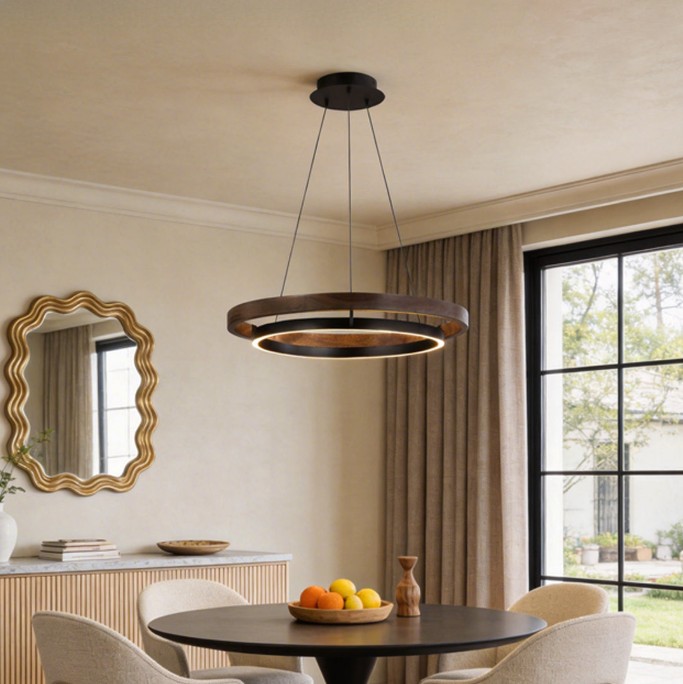
A chandelier can do far more than brighten a room. The right design can define a dining area, balance a high ceiling, and give an otherwise simple interior a memorable focal point. However, choosing a statement fixture is not only about finding a style that looks attractive in a photograph. Its shape needs to work with the proportions of the room and the furniture below it.
Two popular options create very different effects. Linear chandeliers introduce structure and work naturally with long surfaces, while wagon wheel designs add scale, symmetry, and a stronger architectural presence. Understanding how each style changes a room can help homeowners make a choice that feels intentional rather than oversized or out of place.
The shape and scale of a chandelier should complement both the room and the furniture beneath it.
Why Chandelier Shape Matters
Lighting occupies valuable visual space near the centre of a room. A fixture that follows the shape of the furniture below it often creates a more balanced result. Long dining tables and kitchen islands usually benefit from horizontal lighting, while round tables and open entryways can support wider, more symmetrical chandeliers.
The architecture matters too. A narrow room may feel crowded beneath a very wide circular fixture. By contrast, a small pendant may disappear in a vaulted living room or double-height entrance. The goal is to choose a chandelier that fills the available space without blocking views or making movement uncomfortable.
Choose a Linear Chandelier for Long Surfaces
A Linear Chandelier is designed to extend horizontally, making it especially suitable above rectangular dining tables, kitchen islands, breakfast bars, pool tables, and long office tables.
Because the fixture follows the length of the surface below, it distributes visual weight more evenly than a small central pendant. It can also help define a dining or kitchen zone within an open-plan interior without adding partitions.
Linear chandeliers range from simple illuminated bars to decorative frames with branching arms, glass shades, or hanging elements. Slim black designs can create a clean architectural look, while brass and gold finishes add warmth. Fixtures incorporating clear glass often feel lighter, which can be useful when the room already contains substantial furniture.
This style is usually the stronger option when the room needs order and proportion. It draws the eye along the length of the table or island and can make the entire arrangement feel more carefully planned.
Choose a Wagon Wheel Chandelier for Scale and Symmetry
Wagon Wheel Chandeliers use a circular frame with lights arranged around its edge. Their balanced shape creates an immediate focal point and provides visual interest from several directions.
This makes them well suited to large living rooms, vaulted dining areas, foyers, covered great rooms, and spaces with high or open ceilings. A single-tier design can add presence without feeling overly elaborate, while a multi-tier chandelier can fill substantial vertical space.
Although wagon wheel chandeliers are often associated with farmhouse interiors, modern versions can work in industrial, rustic, transitional, and contemporary homes. A simple black metal frame feels bold and structured, while wood details introduce warmth. Candle-style bulbs create a more traditional appearance, whereas glass shades or streamlined light sources can make the design feel more current.
The circular shape can also soften rooms filled with straight lines, such as exposed beams, rectangular windows, long sofas, and angular cabinetry.
Match the Fixture to the Furniture
The chandelier should feel connected to the main furniture arrangement. A long rectangular table normally works best with a linear fixture because both shapes follow the same direction. A round or square dining table may look more balanced beneath a circular wagon wheel design.
In a living room, consider the entire seating area rather than one individual item. A wagon wheel chandelier can anchor a broad arrangement of sofas and chairs, while a linear fixture may better suit a narrower room with furniture arranged along one axis.
The chandelier does not need to copy the furniture shape exactly, but there should be a clear visual relationship between them.
Consider Ceiling Height and Room Size
Statement chandeliers need enough surrounding space to look comfortable. Large wagon wheel designs usually perform best in rooms with generous width and ceiling height. In lower or narrower interiors, a shallow linear chandelier may create impact without occupying as much vertical space.
Before installation, measure the ceiling height, furniture dimensions, and available clearance. In dining areas, the chandelier should hang low enough to feel connected to the table but high enough that people can see each other comfortably. In entrances and walking areas, sufficient headroom is essential.
It is also worth considering how the fixture will be cleaned and maintained. Large chandeliers installed beneath very high ceilings may require specialised access, so bulb replacement and routine cleaning should be planned before installation.
Coordinate the Finish With the Interior
A chandelier looks more intentional when its finish relates to other details in the room. Black metal can connect with window frames, chair legs, cabinet handles, or stair rails. Brass can complement warm wood, beige fabrics, and gold-toned hardware. Wood accents can help a large metal chandelier feel softer and more residential.
Exact matching is unnecessary. Repeating the chandelier finish in two or three smaller details is usually enough to create a coordinated appearance without making the room feel overly uniform.
Do Not Rely on the Chandelier Alone
A statement fixture may be the visual centre of the room, but it should not be expected to provide every type of illumination. Dining rooms may benefit from wall lights or lamps, while kitchens still need practical task lighting around work surfaces.
Layering different light sources allows the chandelier to create atmosphere without forcing it to remain at maximum brightness. A dimmer can also make the fixture more flexible for meals, entertaining, cleaning, and everyday use.
Final Thoughts
Linear and wagon wheel chandeliers can both transform a room, but they solve different design problems. Linear fixtures provide balance above long tables and islands, while wagon wheel designs fill larger spaces with symmetry and architectural presence.
The best choice depends on the furniture shape, ceiling height, room width, and overall mood. By considering scale, placement, finish, and practical lighting needs together, homeowners can select a chandelier that feels naturally connected to the space rather than simply added for decoration.