Summer Routes for Those Who Don’t Like the Heat: Parks, Forests, Canyons, Waterfalls
Not everyone wants a summer built around sun, beaches and hot city streets. For many travelers, high temperatures reduce energy, disturb sleep and make sightseeing feel like work. A better summer plan is to choose routes shaped by shade, water, altitude and air movement. Parks, forests, canyons and waterfalls can provide outdoor time without forcing the body to fight heat all day.
Cooler routes are not only more comfortable. They allow longer walks, safer movement and better recovery. Some travelers use midday breaks for reading, games or a short online pause to read more, but the main strategy is practical: choose landscapes that reduce heat exposure instead of trying to endure it.
Why Heat-Sensitive Travelers Need Different Routes
Summer heat changes how the body behaves. Walking speed drops, water needs rise, and attention becomes weaker. In cities, stone, asphalt and buildings can hold heat long after sunset. On open trails, direct sun can make even short distances difficult.
People who dislike heat often plan around destinations instead of microclimates. This is a mistake. A famous viewpoint may be miserable at noon, while a shaded forest path nearby may feel manageable. A park with water access can be better than a central square. A canyon with early shade can be better than an open hillside.
The right route should answer four questions: how much shade is available, where is the water, what time does the sun hit the path, and how easy is it to leave if conditions become uncomfortable?
Parks: The Easiest Cooling Infrastructure
Urban and regional parks are the simplest summer option for people who do not tolerate heat well. They usually offer shade, benches, water points, toilets and short routes. This makes them safer than remote areas, especially during hot periods.
The best parks for summer walking have tree cover, ponds, rivers, botanical sections or elevation changes. Large lawns may look inviting but can feel hot if there is no shade. A route under mature trees is usually better than a route through open grass.
Parks also work well for flexible planning. You can walk early, rest during midday and return in the evening. For a half-day route, combine a shaded loop, a picnic spot and one indoor stop nearby, such as a museum, library or café. This keeps the day active without overexposure.
Forest Routes: Shade, Air and Slower Travel
Forests are often the best summer routes because they reduce direct sun and create a different temperature experience. Even when the air is warm, shade and soil can make walking feel easier than on roads or open trails.
A good forest route should be chosen by terrain, not only distance. Five kilometers on flat forest paths may be restorative. Five kilometers with steep climbs, exposed clearings and poor markings may be tiring. Check elevation, trail surface, water access and exit points before leaving.
Forests also require practical preparation. Mobile signal can be weak. Insects may be active. After rain, paths can be muddy. Bring water, a charged phone, offline map, repellent and shoes with grip. If traveling alone, choose marked routes rather than informal paths.
The best time for forest walking is early morning or late afternoon. Midday can still be acceptable under dense shade, but humidity may rise, especially after rain.
Canyons: Cool Air, Shade and Timing
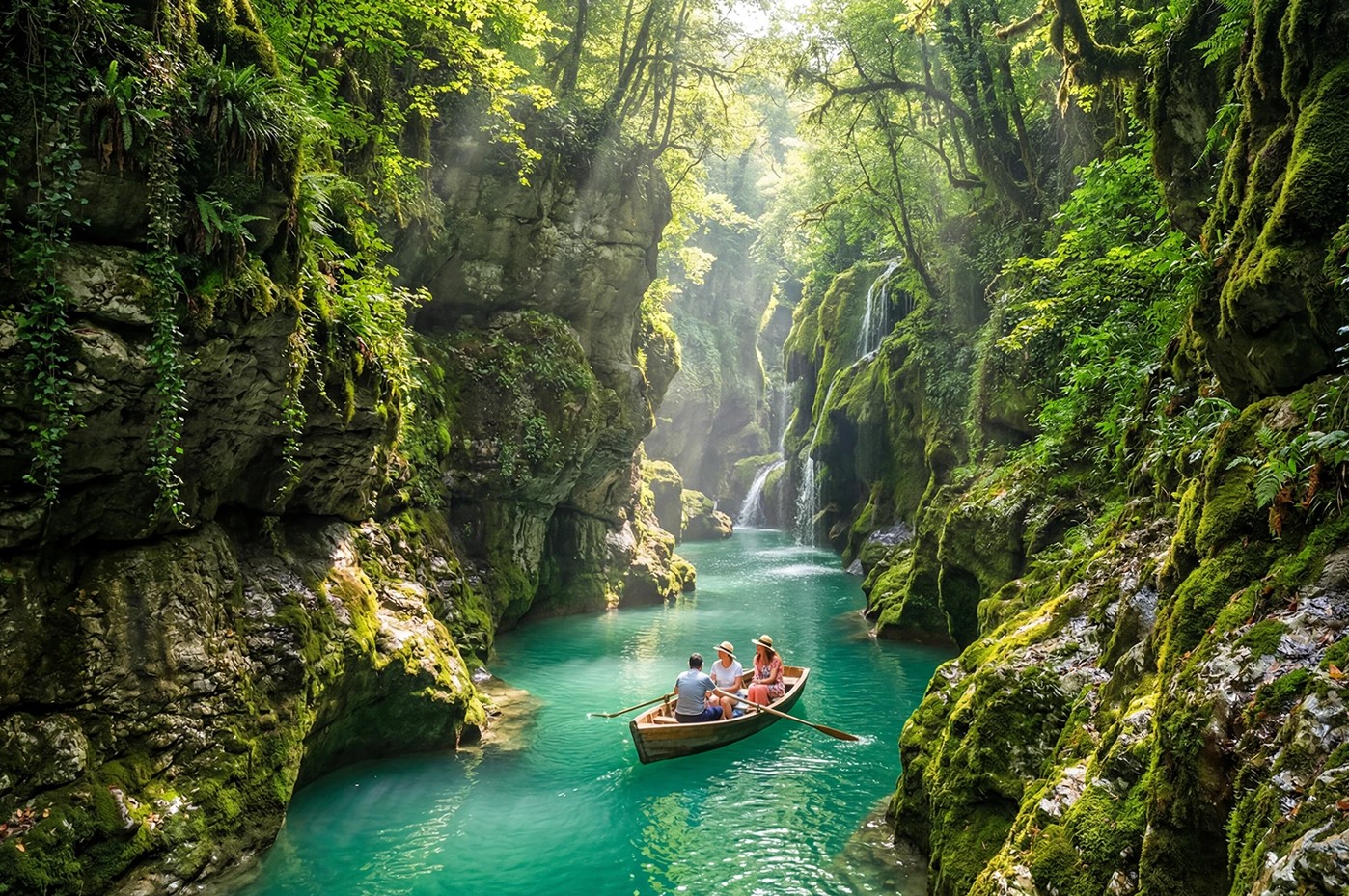
Canyons can be excellent for heat-sensitive travelers because their walls create shade and channel air. Some routes follow rivers or streams, which can make the experience cooler. However, canyons require more caution than parks or forests.
Timing is essential. A canyon may be shaded in the morning but exposed later. It may also become dangerous during storms because water can rise quickly. Before choosing a canyon route, check local weather, access rules, route difficulty and whether permits or guides are required.
Footwear matters. Canyon paths may include stones, wet surfaces, narrow passages or uneven steps. A traveler who wants a comfortable route should avoid technical canyoning and choose walking routes with clear trails.
Canyons are best for people who want a sense of landscape without long sun exposure. They also photograph well without needing crowded viewpoints, which makes them useful for slower summer travel.
Waterfalls: Cooling Stops With Real Limits
Waterfalls are attractive in summer because they combine sound, shade, spray and movement. They can become a natural cooling point on a route. A waterfall walk can also be shorter than a mountain hike while still feeling like a real excursion.
The problem is that waterfalls often become crowded during heatwaves. If a waterfall is easy to reach, expect more visitors. To avoid this, go early, choose weekday visits or look for lesser-known cascades connected to longer routes.
Safety is important. Wet rocks are slippery. Swimming may be forbidden or unsafe. Water depth can change, and currents near falls can be stronger than they look. Stay on marked paths and avoid climbing beyond barriers for photos.
A good waterfall day includes more than the waterfall itself. Add a shaded approach trail, a simple meal, a rest stop and a return plan. This prevents the trip from becoming a rushed visit to one crowded point.
How to Build a Heat-Smart Route
A heat-smart route starts with timing. Begin early when possible. Reserve midday for shade, water, lunch or rest. Use late afternoon for a second short walk if temperatures fall. Avoid routes that place the hardest climb during the hottest part of the day.
Second, choose loops carefully. Loops are interesting, but out-and-back routes can be safer in heat because you know the return path. If you are unsure about conditions, choose a route with several exit points.
Third, plan water. Do not assume there will be fountains, shops or clean streams. Carry enough water and check refill options. In hot weather, dehydration can happen before you feel seriously thirsty.
Fourth, reduce load. A heavy backpack increases heat stress. Bring what matters: water, sun protection, light layer, snack, map, phone, power bank and basic first aid.
Best Leisure Formats for Cool Summer Routes
For a short break, choose a shaded park and a café or museum nearby. This works well when you want relief without travel planning. For a day trip, choose a forest route with a picnic stop and a clear return. For a weekend, combine a canyon walk, a village stay and a waterfall visit. For a longer vacation, choose a region with several shaded routes rather than one famous attraction.
Families should prioritize parks, easy forests and official waterfall paths. Couples may enjoy canyon walks or lakeside forest routes. Solo travelers should choose marked routes with good access. Older travelers or people with health concerns should avoid remote routes during peak heat.
A Different Kind of Summer
Summer travel does not have to mean tolerating heat. Parks, forests, canyons and waterfalls offer a different model: more shade, more water, more movement and less pressure. The best route is not always the longest or most famous one. It is the one that lets you stay outside without draining your body.
For people who dislike heat, the goal is not to escape summer completely. It is to design summer around cooler places and better timing. With the right routes, hot months can still include walking, nature and travel without turning every day into a test of endurance.